
Top 10 Best Web Hosting Services for 2025
 Choosing the right web hosting service affects your site’s speed, reliability, security, and long-term growth. Whether you are building a personal blog, an online store, or a business website, your hosting provider plays a key role in performance and ease of management. This guide reviews ten leading hosting companies by comparing server speed, pricing transparency, customer support, beginner usability, and essential features such as SSL, backups, CDN, and storage, using publicly available data and recent performance reviews to help you choose the option that best fits your needs.
1. Hostinger — Best Overall Value
 Hostinger stands out as an affordable yet high-performing hosting provider. It offers shared, cloud, VPS, and managed WordPress hosting plans. Prices for shared hosting often begin around a low introductory rate when committing to a multi-year plan.
Key Features
SSD and NVMe SSD storage (depending on plan)
Free SSL certificate included on all plans
Free domain registration for the first year
Custom control panel (hPanel), designed to be easy to navigate
Integrated website builder with AI-based setup assistance
Global data center locations to reduce latency
Pros ✅
Excellent affordability on long-term plans.
Beginner-friendly hPanel dashboard.
Strong WordPress integration and specialized tools.
Daily backups included on most plan tiers.
Cons ❌
High renewal rates after the initial introductory term.
Entry-level plans have strict resource limitations.
Customer support is primarily via live chat (no phone support).
Best For: Individuals, small business owners, and new projects seeking cost-efficiency without sacrificing performance.
2. SiteGround — Best for Customer Support and Reliability
 SiteGround is often chosen for its stability and premium customer service. It is built on Google Cloud infrastructure, which contributes to its consistent uptime.
Key Features
Free SSL certificates (Let’s Encrypt)
Free CDN built into every plan
Automatic daily backups
Managed WordPress support and staging environment
AI-enabled security protection
Pros ✅
Top-tier customer support responsiveness and expertise.
Consistent reliability backed by Google Cloud infrastructure.
Strong built-in security and specialized WordPress caching.
Excellent overall WordPress performance.
Cons ❌
Significant price increase after the first term.
Higher overall cost than budget-focused competitors.
Storage limits can be restrictive on lower-tier plans.
Best For: Users who prioritize stability, support responsiveness, and easy WordPress management.
3. A2 Hosting (Hosting.com) — Best for Speed and Technical Control
A2 Hosting, now rebranded as Hosting.com, is well known for its performance-focused hosting. It uses LiteSpeed servers and caching configurations intended to improve loading speed.
Key Features
SSD storage by default
LiteSpeed server stack optimized for performance
Free site migration assistance
24/7 technical support
Cloudflare CDN included
Pros ✅
"Turbo" plans offer exceptional loading speeds.
Free and helpful site migration service for new users.
Reliable uptime and performance for technical projects.
Cons ❌
Higher cost compared to basic budget hosts.
The cPanel interface may be less beginner-friendly for some.
Advanced speed features are reserved for higher-priced plans.
Best For: Developers and site owners who want more control, faster server response times, and the ability to scale.
4. DreamHost — Best for Simple, Flexible Resource Allocation
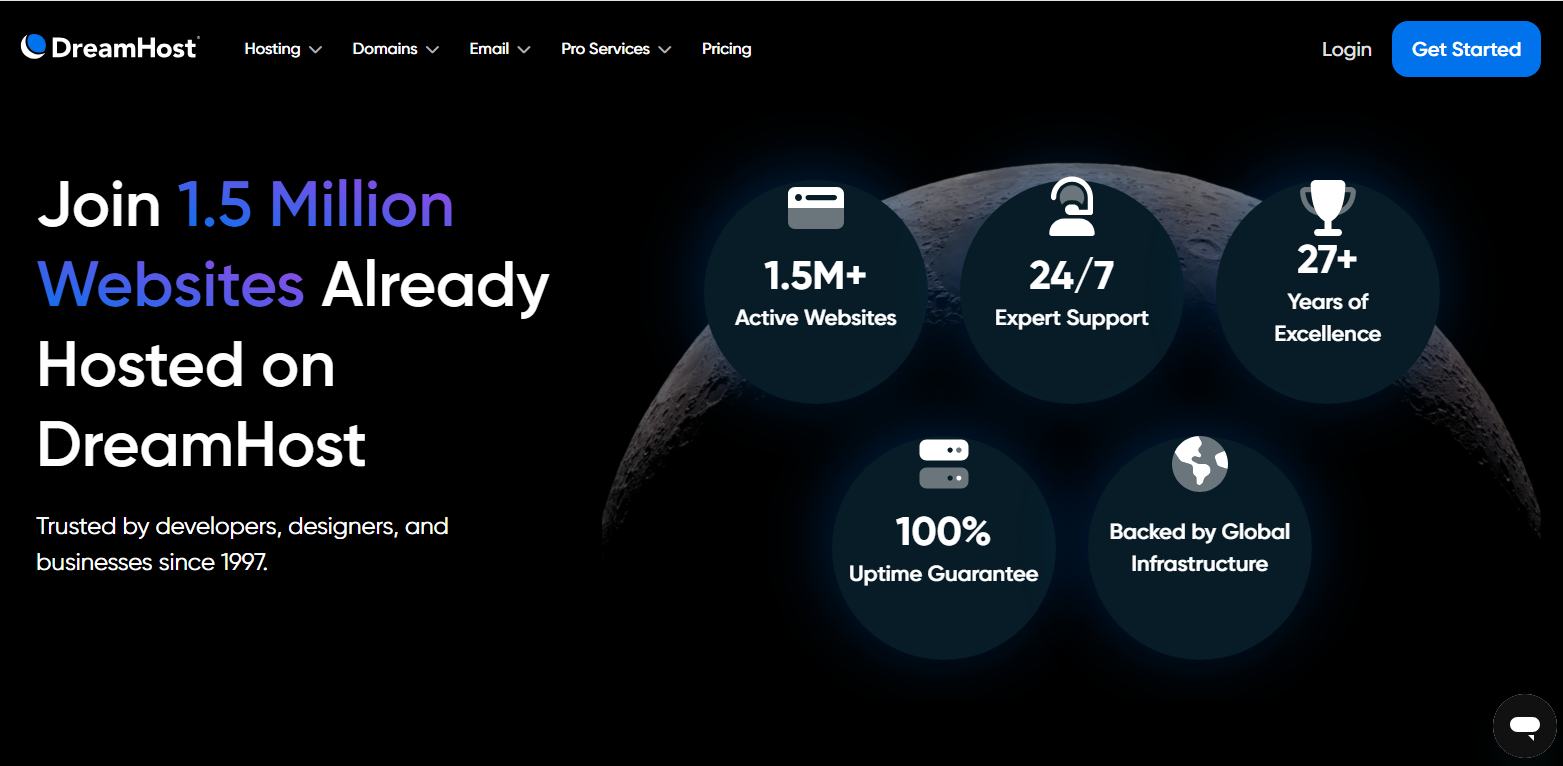 DreamHost has been operating for several decades and remains a recognized name in hosting. It provides shared, VPS, cloud, and dedicated server options.
Key Features
97-day refund period
Unlimited bandwidth and storage on shared plans
Free domain for first year
Free SSL certificate
Custom control panel that is easy to use
Pros ✅
Generous 97-day money-back guarantee.
Transparent and predictable pricing models.
Good resource allowances for bandwidth and storage.
Free automated WordPress updates included.
Cons ❌
The custom control panel can take time to master.
Customer support wait times can vary during peak hours.
Fewer one-click installers compared to standard cPanel hosts.
Best For: New users who want simplicity and predictable pricing without unexpected add-ons.
5. Bluehost — Best for Beginners Using WordPress
Bluehost is widely known and is officially recommended by WordPress.org. Its shared hosting plans often include beginner-friendly tools and onboarding features.
Key Features
Free domain for first year
Free SSL certificate
Cloudflare CDN integration
WordPress staging and simple installer
Available phone and chat support
Pros ✅
Highly user-friendly dashboard designed for beginners.
Officially recommended by the WordPress.org team.
Strong community support, tutorials, and guides.
Cons ❌
High renewal rates after the initial introductory period.
Aggressive upselling of add-ons during the checkout process.
Backups and advanced security features often cost extra.
Best For: First-time website creators and WordPress blog owners who want straightforward setup tools.
6. HostGator — Best Budget-Friendly Hosting for Beginners

HostGator offers a familiar cPanel interface and simple setup tools suitable for those new to hosting.
Key Features
Free domain registration (first year)
Free SSL certificates
Unmetered storage and bandwidth
24/7 support
One-click WordPress installation
Pros ✅
Simple onboarding with a familiar cPanel environment.
Reliable performance for small and medium-sized sites.
30-day money-back guarantee for peace of mind.
Cons ❌
Frequent upselling of extra services during checkout.
Performance can slow down on busy shared servers.
Support on the introductory plan is often limited to live chat.
Best For: Hobby websites, personal portfolios, and beginners who want a simple, standard setup.
7. GreenGeeks — Best Eco‑Friendly Hosting Provider
GreenGeeks markets itself on sustainability, offsetting energy use through renewable credits.
Key Features
Planting of trees per account created
SSD storage included in all plans
Free SSL certificates
Free domain registration for first year
Cloudflare CDN
Pros ✅
Industry-leading 300% renewable energy match.
Solid uptime and overall server performance.
Free domain name included for the first year.
Cons ❌
High renewal pricing after the initial term.
Performance can vary depending on the chosen data center.
Setup fees may apply to some monthly billing cycles.
Best For: Users who prefer a hosting provider with a clear environmental commitment.
8. Namecheap — Best for Cost-Conscious Users
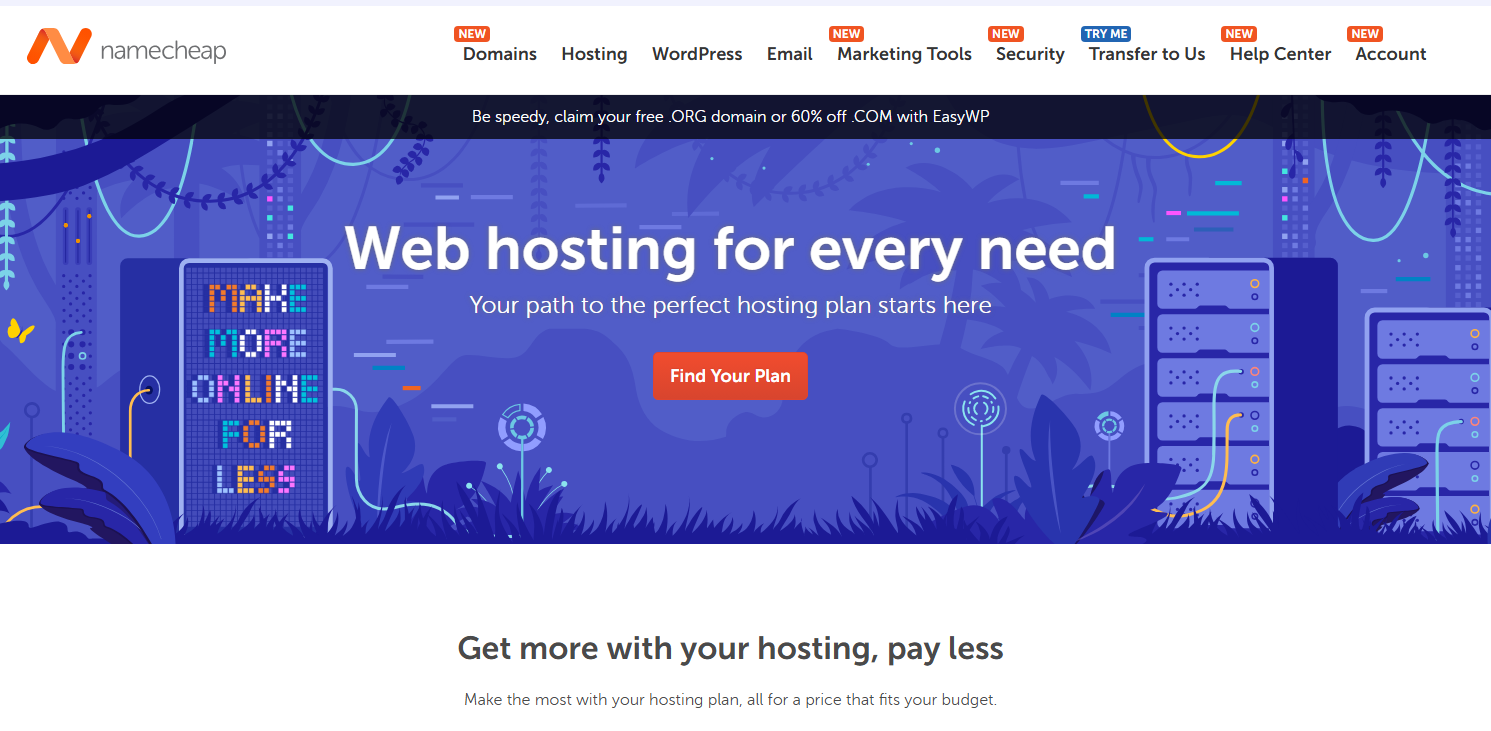 Namecheap hosts websites through shared plans and managed WordPress (EasyWP). The pricing for shared hosting has a low introductory rate.
Key Features
Free domain (first year) with shared plans
Free SSL on many shared plans
Supersonic CDN included
Easy-to-use control panel interface
Pros ✅
Very affordable introductory prices for starters.
Includes free domain and domain privacy features.
Modern and user-friendly management interface.
Cons ❌
Renewal rates are significantly higher than intro rates.
Backups and email may be limited on the cheapest plan.
Support responses can sometimes be slower than premium hosts.
Best For: Budget shoppers, student projects, and small personal sites.
9. GoDaddy — Best All-in-One Hosting and Domain Service
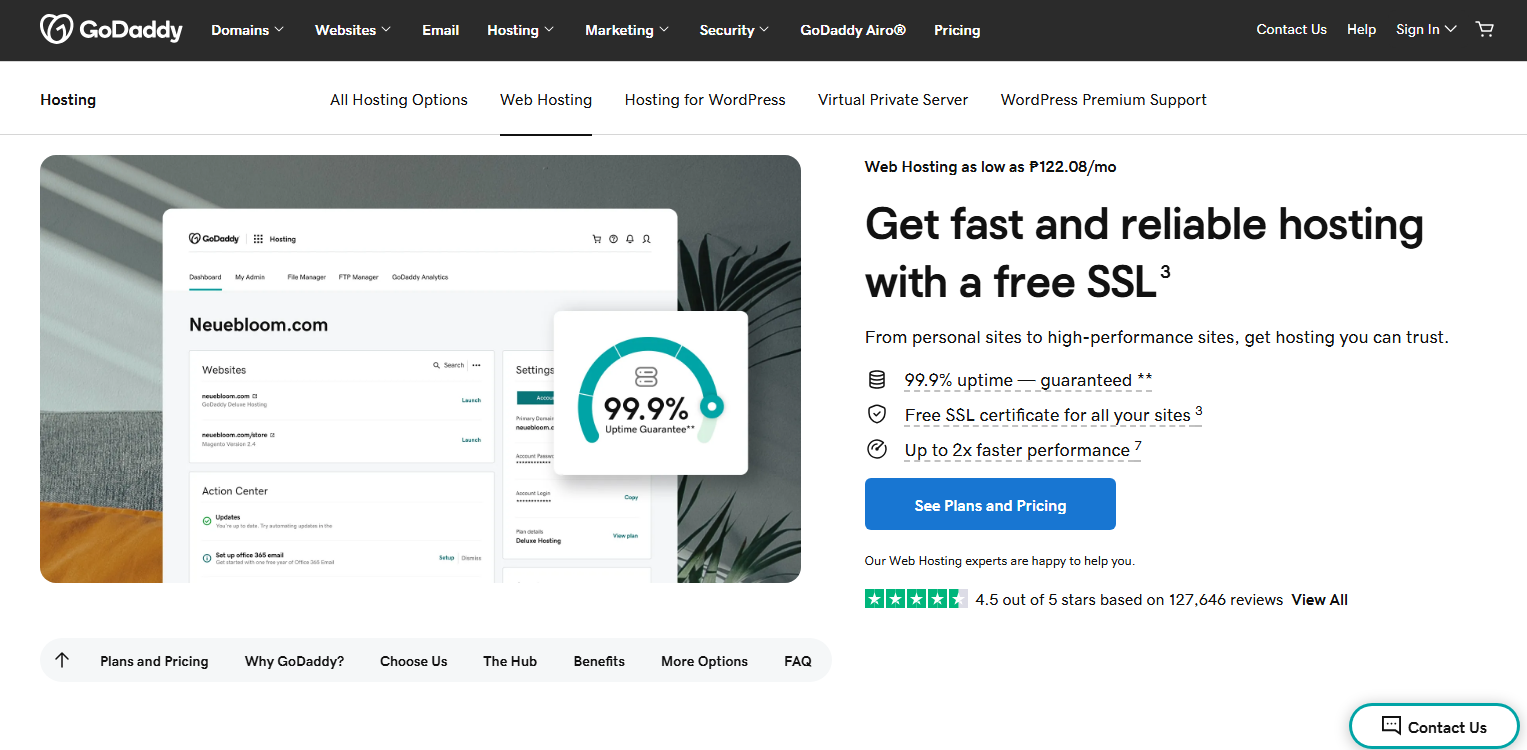 GoDaddy provides hosting, domains, email services, marketing integrations, and website building tools under one account.
Key Features
Free domain for first year
Daily backups included depending on plan
24/7 support
Browser-based website builder
Pros ✅
Centralizes domains, hosting, and email in one place.
Easy to upgrade plans as your website grows.
24/7 phone and chat support availability.
Cons ❌
SSL certificates often cost extra on the cheapest plan.
Add-ons and renewals can increase total costs quickly.
Overall performance is average compared to specialized hosts.
Best For: Users who want centralized account management for domain, website, and business tools.
10. WordPress.com (Managed) — Best Fully Managed WordPress Hosting
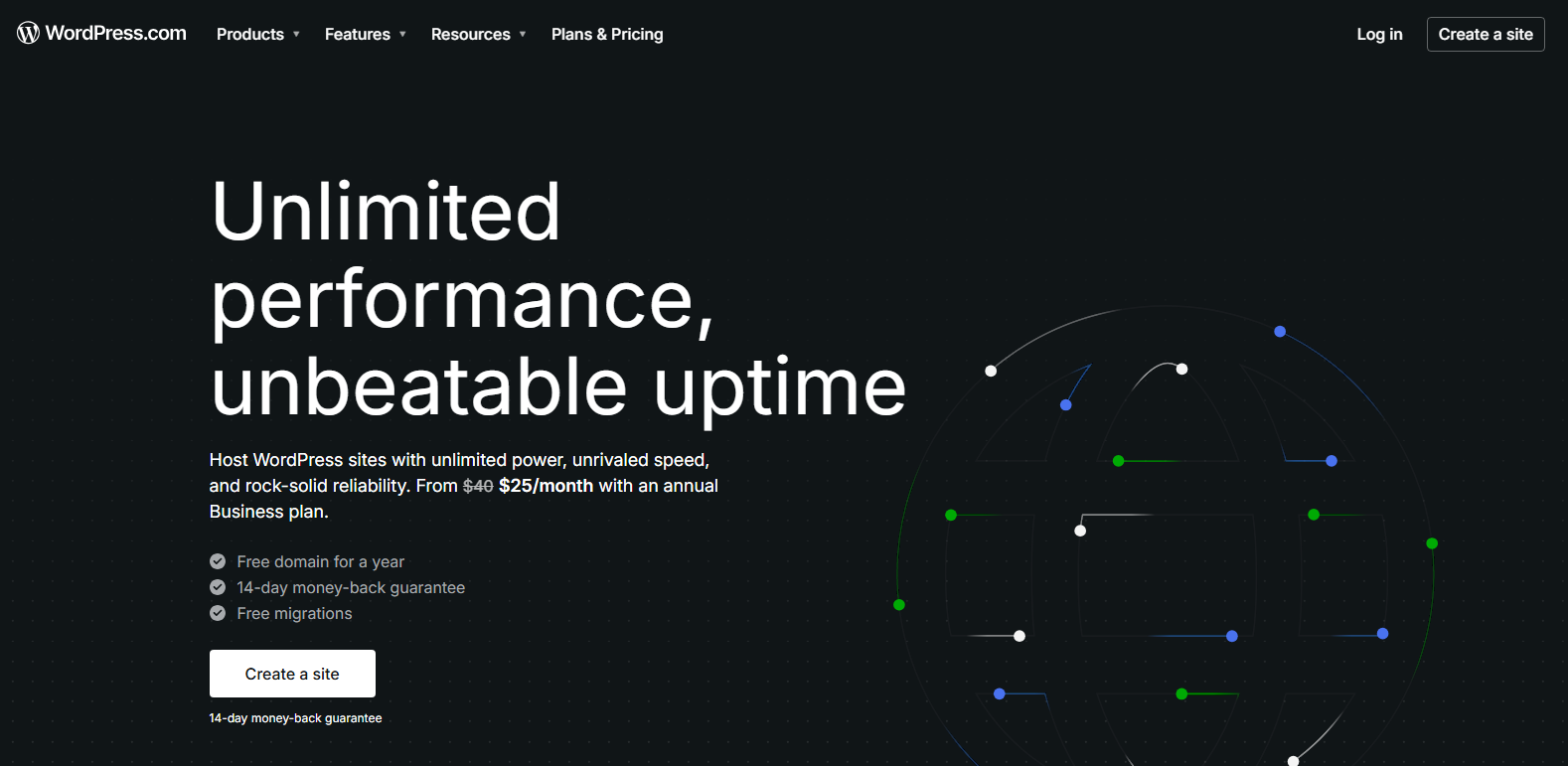
WordPress.com is a managed hosting platform specific to WordPress websites, handling the technical backend for you.
Key Features
Automatic updates for core software
Built-in CDN and backup system
Free SSL on all plans
Security handling integrated into the platform
Pros ✅
Extremely simple setup and hands-off maintenance.
Fully managed security and automatic backups.
Optimized specifically for WordPress speed and stability.
Cons ❌
Cannot install custom plugins on the lower-tier plans.
No access to cPanel or direct server files.
Can be more expensive than general shared hosting.
Best For: Users who want a WordPress-only website with minimal maintenance responsibility.
Final Comparison and Summary
Choosing the right web host depends on your website goals. If cost efficiency and balanced performance are the primary concerns, Hostinger is a practical choice. For those who value customer service and consistent reliability, SiteGround may be more appealing. Users who need high-speed performance or technical flexibility may benefit more from Hosting.com (A2 Hosting).
Beginners may find Bluehost or HostGator easier to work with, while those preferring transparent pricing and high resource capacity may prefer DreamHost. GreenGeeks appeals to environmentally conscious users, Namecheap attracts price-conscious shoppers, GoDaddy fits users who want an all-in-one ecosystem, and WordPress.com helps those who want the simplest setup.
Conclusion
Web hosting is not a one-size-fits-all decision. The best service provides the speed, reliability, features, and price structure that fit your goals and technical comfort level. Regardless of which provider you choose, consider long-term pricing, support quality, and how much control you want over your website’s backend.